Build Trust Before the Blackout
- C-Suite Coach

- Apr 8
- 2 min read

This week, four astronauts flew behind the Moon, lost contact with Earth for forty minutes, and came back having traveled farther from home than any human being in history. When Christina Koch saw the far side of the lunar surface for the first time with her own eyes, she said simply: "It's not the moon that I'm used to seeing." There is something in that line that goes beyond the moment, something that genuine transformation always produces and that leadership culture rarely makes room for: the honest acknowledgment that the view from here looks different than the one you had before you went.
The mission had already been delayed twice before launch, a hydrogen leak, a helium flow issue, the rocket rolled back, the crew waiting. What finally lifted off on April 1 was a spacecraft carrying the accumulated weight of preparation, recalibration, and the decision to try again. This is the pattern that high-stakes work actually follows, and it is one that leaders consistently undervalue. We have built organizational cultures that treat delay as failure and revision as weakness, when the engineering reality of the Artemis program, and the human reality of most meaningful endeavors, is that the pauses are where the work happens. The leaders who understand this create something rare: teams that can hold uncertainty without losing their nerve, and that trust the process of getting ready more than the appearance of being ready.
This moment lands in the middle of a workplace reckoning that has its own version of the forty-minute blackout. Leaders across industries are navigating the simultaneous pressure of AI-driven restructuring and the genuine possibility of what comes after it, holding fear and excitement in the same hand, asked to be strategically clear about a future that is not yet legible. The Artemis crew survived the blackout because they had built enough trust before the silence started, and that is the leadership variable that never shows up on a transformation roadmap: the relational equity that determines whether your people can hold the unknown alongside you, or whether they fracture under it.
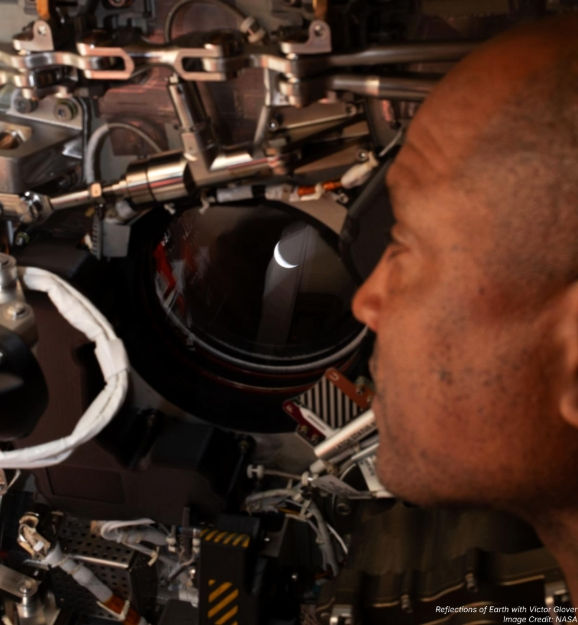
The crew will splash down off the coast of California on April 10, returning with no lunar footprints, no planted flags, and more than anyone knew was possible a week ago. The mission was always a flyby, and it’s important to reiterate that was always the point. The most important work a leader does is the work of the return arc: bringing back what the journey produced, naming what looks different now, and building the next mission on that foundation. The view from the far side is never the same as the one you had at launch, and that difference is the whole point of going.
C-Suite Coach helps organizations develop exceptional leaders through targeted coaching and learning programs. To explore how we can support your team, schedule a consultation today.


Comments